
Putzmeister Concrete Plants: Independent Sourcing Review
An independent B2B supply chain audit of Putzmeister concrete mixing technology, detailing component lineages, wear alloys, and contract risk controls.

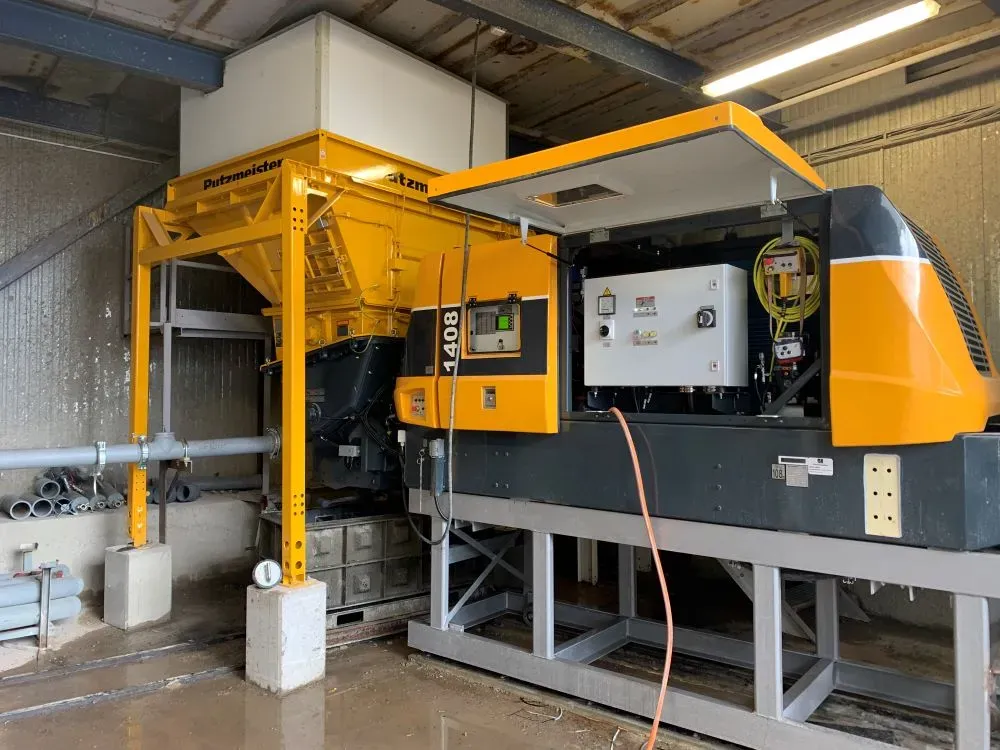
Executive Procurement Summary & Brand Positioning
Within the heavy infrastructure, tunnel excavation, and high-rise commercial construction sectors, Putzmeister Group GmbH occupies the pinnacle tier of the global fluid concrete handling hierarchy. Headquartered in Aichtal, Germany, and backed by the manufacturing scale of Sany Heavy Industry since 2012, Putzmeister acts as a premium engineering house specializing in high-pressure concrete boom pumps, truck-mounted transit mixers, stationary batching towers, and thick-slurry industrial mortar technology.
From a procurement perspective, Putzmeister does not compete in the low-cost, budget-conscious intermediate aggregate machinery tiers. Instead, the brand targets high-specification institutional projects—such as nuclear containment shield pours, massive subway tunneling contracts, and high-altitude sky-scraper construction—where continuous asset uptime is non-negotiable.
While its initial capital expenditure (CAPEX) index sits among the highest in the market, its rigid adherence to European manufacturing standards provides exceptional long-term asset lifecycle cost (LCC) depreciation matrices and high salvage values.
Core Engineering Advantages & Metallurgic Footprints
To evaluate a Putzmeister procurement contract accurately, supply chain auditors must isolate the mechanical and metallurgical standards that separate their mixing and pumping nodes from standard intermediate-tier builders.

1. Hardox 500 Wear Liner Integration & Structural Integrity
Planetary and twin-shaft stationary mixers engineered under the Putzmeister/Stetter umbrella standardise on an advanced Hardox 500 or premium Ni-Hard 4 interior wear liner casting matrix.
- The Metallurgy Edge: Pushing surface hardness profiles past 62 HRC (Rockwell Hardness), this structural optimization provides supreme resistance against high-silica sand and aggressive quartz aggregates. This prevents floor plate scoring and extends the core wear-parts lifecycle out past 150,000 continuous batch sequences before requiring structural plate replacement overhauls.
2. Ergonic 3 Automation and Fluid Power Telemetry
Putzmeister’s automated control systems leverage proprietary Ergonic 3 control deck architecture synced directly with high-speed CAN-bus communications networks.
- The Control Loop: For heavy pumping and batching sequences, Ergonic Fluid Control (EFC) monitors hydraulic line pressures at millisecond intervals. It automatically alters pump displacement and regulates internal variable-frequency drives (VFDs) to dampen mechanical vibrations, cutting structural steel weld fatigue across the concrete tower columns by up to 35%.
3. Patented S-Valve Hydraulic Transfer Geometry
In their high-pressure concrete delivery nodes, Putzmeister utilizes a heavy-duty, cast-steel S-Valve delivery system integrated with automated structural sealing rings. This geometry handles extreme concrete pressures (exceeding 8.5 MPa) without fluid bypass leakage, ensuring continuous, high-volume pours that remain completely clear of aggregate segregation blocks.
Technical Matrix: Premium Tier vs. Standard Sourcing Profiles
The supply chain data matrix below profiles the component and performance variances between Putzmeister's premium heavy-infrastructure configurations and standard mid-market concrete handling machinery.
| Sourcing Metric / Component Sub-System | Putzmeister Premium Infrastructure Tier | Standard Mid-Market Competitor Config | Supply Chain Risk & Lead Time Variable |
|---|---|---|---|
| Interior Mixing Pan Wear Liners | Hardox 500 / Cr26 Castings (62+ HRC) | Manganese Steel (Mn13 Grade, 40 HRC) | Low Risk; Standard European Warehousing |
| Hydraulic Pump & Valve Lines | Bosch Rexroth / Danfoss Closed-Loop | Localized Generic Brand Open Circuits | High Lead Time; Requires Verified OEM |
| Automation PLC & Bus Interface | Ergonic 3 Architecture / Siemens S7 | Basic Standard Touchscreen / Manual Relay | Medium Risk; Software Keys Locked by OEM |
| Structural Frame Corrosion Proof | Full Hot-Dip Galvanization Standard | Two-Layer Polyurethane Paint Coating | Fixed Lead Time; Highly Dependent on Dock Siting |
| Shaft Bearing Sealing Matrix | Progressive Automated Greasing (30 MPa) | Manual Grease Nipples / Grease Gun Block | Low Risk; Standard Maintenance Dependent |
Global Supply Chain Risk Mitigation Guidelines
When finalizing an international factory purchase contract for a Putzmeister asset assembly, procurement managers must integrate three rigid legal and technical safeguards:
- Component Lineage Lock-In Clauses: Explicitly state in the purchase order that all auxiliary hydraulic motors and electronic control relays must utilize globally distributed component lineages. Mandate Bosch Rexroth pumps, Danfoss proportional valves, and Siemens S7-1500 processors. This ensures that your site technicians can source wear components from local industrial distributors, eliminating shipping and customs clearance delays from Europe or China.
- Software License Key Ownership: Because the Ergonic 3 operating deck runs on proprietary encrypted software codes, contract sheets must guarantee the permanent inclusion of unrestricted, tier-1 diagnostic software licenses and firmware access keys. Without this contract clause, the local operation remains entirely dependent on factory field service technicians to clear basic automation errors.
- Emergency Mechanical Auxiliary Backups: For stationary mixing and delivery towers, ensure the contract includes an integrated dual-motor power package redundancy array. If primary electric motor A experiences an insulation grounding failure, the automation grid must automatically isolate the node and run motor B at half capacity to safely empty the live mix before hydration locks the drum.
Advanced Procurement FAQ
Q1: How does a Putzmeister mixer's asset lifecycle cost (LCC) justify its high initial CAPEX compared to a cheap unbranded competitor?
A1: While an unbranded concrete batching plant saves up to 40% on upfront capital expenditure (CAPEX), its operational expenditure (OPEX) penalties drag down project profitability. Cheap configurations experience rapid liner wear, scale drift, and premature transmission housing fractures, causing frequent unscheduled site shutdowns. Putzmeister’s high-hardness metallurgy and automated lubrication matrices push its Mean Time Between Failures (MTBF) past 2,500 operating hours. This long-term tracking reliability maximizes concrete yard yield, reduces parts replacement costs, and protects a high 45% asset salvage value on the international secondhand market.
Q2: Why is the integration of an automated progressive central lubrication network critical for Putzmeister end-shaft bearing protection?
A2: The mixing shafts of heavy ready-mix concrete plants are under continuous attack from abrasive, alkaline cement grout ingress. Manual greasing cycles frequently suffer from human error, leading to bearing starvation or seal blowouts. Putzmeister's automated progressive system forces a metered, high-pressure (30 MPa) dose of fresh EP2 lithium grease directly into the inner labyrinth seals during active mixing. This continuous positive pressure pushes sand dust out before it can score the shaft journals, slashing unplanned mechanical maintenance downtime by 85%.
TAG
Putzmeister concrete batching plant review,Hardox 500 concrete mixer liner wear life,Ergonic 3 concrete automation troubleshooting,Putzmeister Stetter concrete mixing tower price,heavy infrastructure heavy equipment procurement guidelines
Request Technical Blueprints & Factory Quotes
Submit your machinery parameters below. Connect directly with verified, certified heavy industrial manufacturers to receive custom foundation drawings, layout schematics, and direct-from-factory pricing.